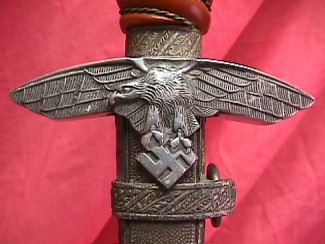
The second pattern Luftwaffe dagger was introduced in 1937. Various officer ranks wore the dagger and
there was no visible difference between them.
The biggest changes between the first model and the second model were the pommel and the hand guard. A
detailed account of the construction of the dagger follows:
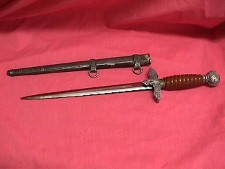
The blade was of type stiletto with the main features being a double edge and a flat plain in its center. The
brand of the manufacturer would normally be placed on the blade. The example shown in this page has no manufacturer's
markings.
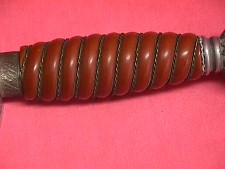
The grip was manufactured from celluloid and consisted of a grooved spiral design. A wire composed of three
strands was placed in the groove. The wire was aluminum and silver in appearance. The grip was available in
white, yellow or orange. If the buyer had the necessary finances, it was possible to purchase ivory grips.
The various types of grips available were strictly a matter of purchaser preference and not a symbol of rank
or status within the Luftwaffe.
This dagger was produced by a very large number of manufacturers.
|
All the metal fittings on the second model Luftwaffe dagger were manufactured from cast aluminum. The scabbard
had smooth sides with a oakleaf design near its tip end and pebbled finish throught most of its body. The sample
shown below has some of its plating missing exposing the bare metal.
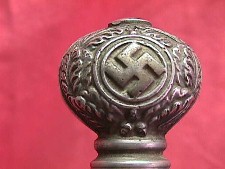
The pommel was rounded and featured a swatika. When the dagger was originally manufactured, the pommel
was gold. However, with the passing of time this color has dissappeared from most of the examples available
in the market.
|
|
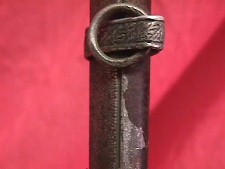
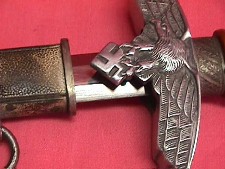
The top of the scabbard reflects both light and dark areas. The light area indicates a section where
the eagle on the handguard prevented the change in color.
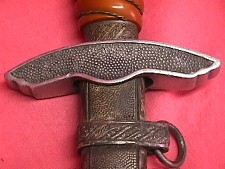
Notice the granular design applied to the back of the hand guard. This design could vary considerably
depending on the manufacturer.
This edge weapon is currently being
reproduced.
It is becoming more difficult to be able to tell the fake ones from the real ones because
the quality of the reproductions is improving. The collector must become familiarized with
the construction style and materials employed in the manufacturing of this edge weapon.
Attention to the details is critical in order to be able to determine the authenticity of
the edge weapon.
If you have an interest is seeing other edge weapons of the Third Reich, you can do so by
going to our WWII German Edge Weapons
identification guide. Where we cover blades from the Heer (Army), Navy (Kriegsmarine),
Air Force (Luftwaffe), political and other organizations.
|





 Swat the Shopping Bug to view related military items!


