WWII GERMAN DAGGER - RED CROSS
The red cross, also known as DRK dagger, was introduced in 1938. There were two types of styles, the
leader dagger and subordinate Hewer.
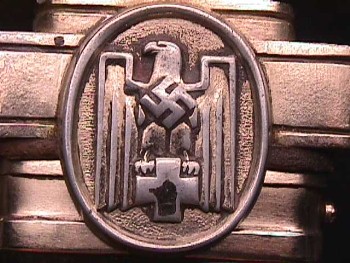
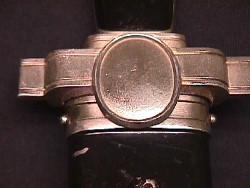
The front of the dagger has an oval shape with an eagle holding a cross. The back of the hand guard has
the same shape but it does not have any designs on it.
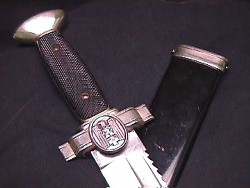
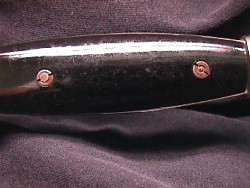
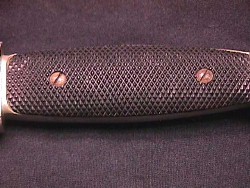
The handle of the dagger is made from plastic. The front of the handle is checkered while the back is smooth
and shiny. The handle is secured to the tang via two screws which goes through each handle. One side shows the
screw heads (bottom-right) while the other side shows the screw tip (bottom-left).
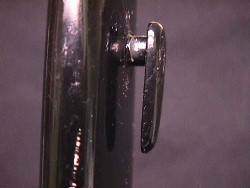
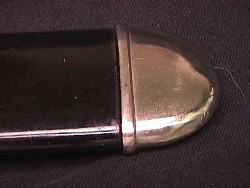
The scabbard is painted in black enamel, it is very heavy, smooth and has a high shine. A stud was welded to its back to
allow the dagger to be carried on a belt in a similar fashion as some bayonets. The tip and throat of the scabbard consisted
of nickel fittings (pre-war) or plated pot metal. The tip fitting is a dome-like shape.
|
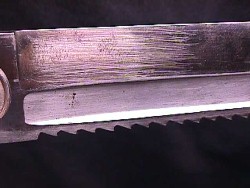
The blade is one of the most unique aspects of this dagger. The back of the blade is serrated and the tip
is blunt. The pictures that follow provide a clear view of the characteristics of a blade.
This is an identification guide for the Red Cross daggers employed during the Third Reich.
Multiple photos and descriptions are provided to enhance the understanding of this
interesting collectible. A price guide is included to illustrate the value of the
daggers in the collector's market.
|
|
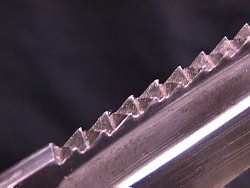
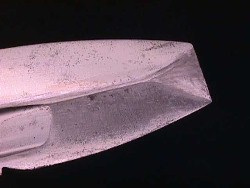
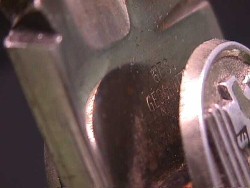
Traces of sharpening can be seen on the blade. Unfortunately many of the GIs who brought back the
daggers as souvenirs would try to use them as regular knives. Another feature of the blade is the manufacturer's brand. Although
not easily visible due to the construction of the hand guard, it can be distinguished on the bottom right-hand photograph.
This edge weapon is currently being
reproduced. It is becoming more difficult to be
able to tell the fake ones from the real ones because the quality of the reproductions is improving. The
collector must become familiarized with the construction style and materials employed in the manufacturing
of edge weapons. Attention to the details is critical in order to be able to determine the authenticity
of the item.
If you have an interest is seeing other edge weapons of the Third Reich, you can do so by going to our
WWII German Edge Weapons identification guide. Where
we cover blades from the Heer (Army), Navy (Kriegsmarine), Air Force (Luftwaffe) and other organizations.
| 





 Swat the Shopping Bug to view related military items!


