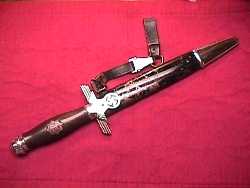
WWII GERMAN DAGGER - 1ST MODEL RLB SUBORDINATE
The Subordinate RLB dagger was introduced in 1936. This dagger is more difficult to obtain
because it was not issued automatically to the individual, but rather, it had to be earned.
Many other daggers could be purchased by the wearer. This one was not commercially available.
The dagger was constructed with nickel plated fittings. The scabbard is made from steel and it
is painted black. In addition, it has a nickel plated fitting on its tip. Overall, the lines
are very clean and simple. The blade is double edged. The grip was manufactured form either ebony
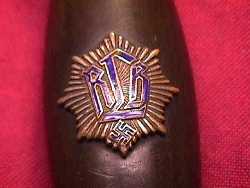
or black stained hard wood. An enamel RLB sunburst insignia is affixed to its center. The pommel
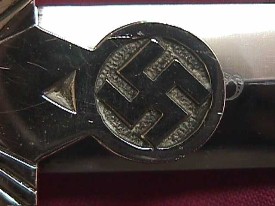
consisted of a dome shaped fitting. The handguard had a fairly large silver eagle standing over a
swatika. The hanger is permanently attached to the scabbard via a triangular metal bracket.
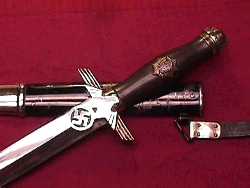
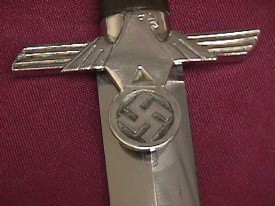
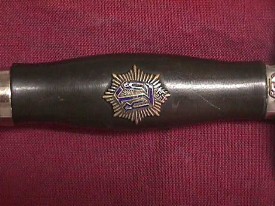
A closer look at the RLB sunburst emblem is displayed on the picture below. The base of the blade
holds the manufacturer's brand (WKC in this example). Reproductions of this dagger are currently being
produced.

|
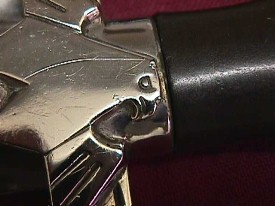
The front and the back of the eagle are shown below. Also, a close up of the eagle head
and the swastika held by the eagle are provided. It is important to pay attention to these
details because they will help a collector identify the real thing from a fake piece.
The information outlined here includes detailed photos and descriptions creating an
identification guide for the RLB daggers employed during the Third Reich. A price guide
is also presented to illustrate the value of the dagger in the collector's market.
This identification and pricing service is brought to you courtesy of
MilitaryItems.com , a provider of a wide
range of military antiques and collectibles. With over 3,000 items listed in the website
and new inventory added every day.
|
|
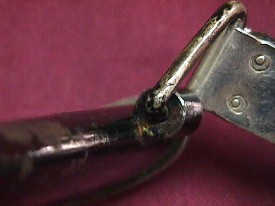
The hanger for the dagger was permanently attached to the scabbard. A close up showing how the
bracket was attached is shown here. The design consists of a tubular bracket where a wire-type
triangle runs through. A certain degree of movement is allowed. This eliminates stress
caused by the movement of the person when he is wearing the dagger. Otherwise the bracket
could snap loose.
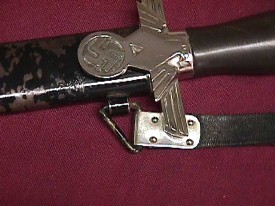
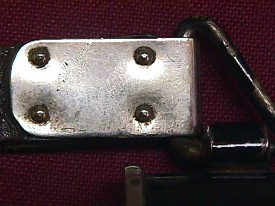
The dagger hanger consists of a brown leather strap with silver metal fittings. The hanger
is attached to the scabbard via the use of a metal section with oval edges. It is secured
via the use of four rivets. A clip is found on the other end. It is spring loaded. It
secures the dagger to the uniform.
Close up views of the front and back of the hanger metal strap are provided. Special attention
should be placed to the rivets holding the piece together.

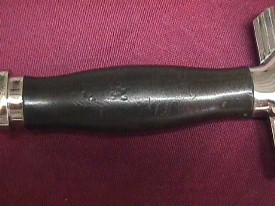
Pictures of the front and back of the handle are shown. In the shape of a coke bottle. Rounded
edges. The front has a starburst pattern RLB emblem affixed to the center of the body. With
blue enamel letters and a similar construction swastika placed just below the initials.
The back of the handle is smooth. It does not have any markings.
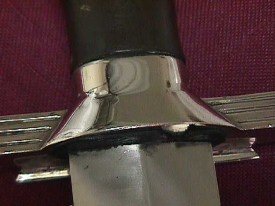
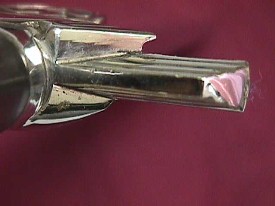
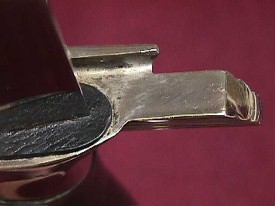
The handguard consists of a three tear, descending order silver metal structure. With
blunt edges. The following photographs illustrate the top and bottom views of the dagger's
hand guard. An oval section of corinthian leather is placed at the base of the blade. This
provides a tighter fit when the blade is placed in the scabbard.
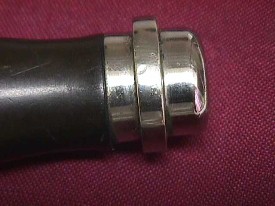
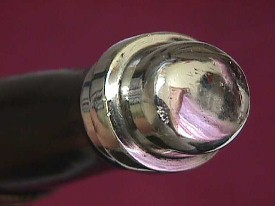
The pommel of the dagger is rounded. Silver in color. It has a multi-piece design where it shows
a low side, then a high side, then a low side again. Two pictures showing a side and top view of
it follow.
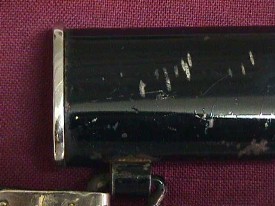
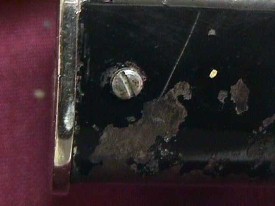
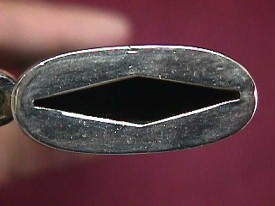
The front and back of the throat of the scabbard are displayed here. Notice that only one side
has a screw. The mouth of the scabbard is also featured here. Notice its elongated triangular
design with silver color to match the pommel and rest of the fittings.
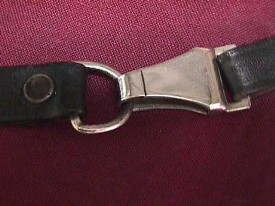
The front and back pictures of the hanger's clip are provided. The back section is marked
with the initials DRGM and bears the manufacturer's brand, which in this case is a letter "A"
that stands for the company "Assmann".
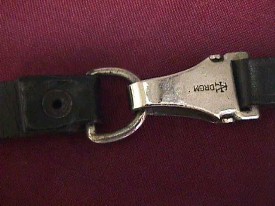
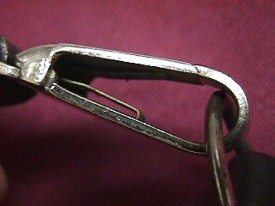
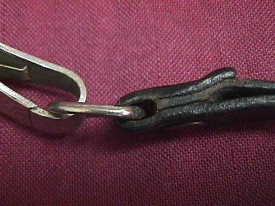
A close up side view of the clip follows. Notice the spring structure that secures it in the
closed position. Also shown here is the basic construction of the leather holder.
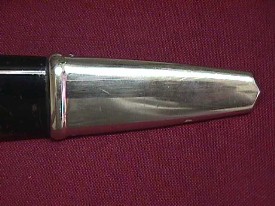
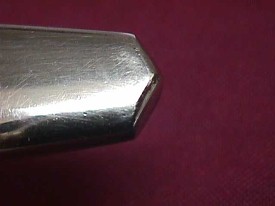
The tip of the scabbard has a chromed fitting. This fittinsg is secured via two screws, one at each
side of it. The tip ends in a triangular pattern.

This edge weapon is currently being
reproduced. It is becoming more difficult to be
able to tell the fake ones from the real ones because the quality of the reproductions is improving. The
collector must become familiarized with the construction style and materials employed in the manufacturing
of edge weapons. Attention to the details is critical in order to be able to determine the authenticity
of the item.
If you have an interest is seeing other edge weapons of the Third Reich, you can do so by going to our
WWII German Edge Weapons identification guide. Where
we cover blades from the Heer (Army), Navy (Kriegsmarine), Air Force (Luftwaffe) and other organizations.
| 





 Swat the Shopping Bug to view related military items!


