|
WWII US Army M-1 Helmet -
The M1 helmet is a combat helmet that was used by the American military from World War II until it was succeeded by the PASGT helmet beginning in 1985. For over forty years, the M1 was standard issue for the U.S. military and naval forces, and has become an icon of the American military, with its design inspiring other militaries around the world.
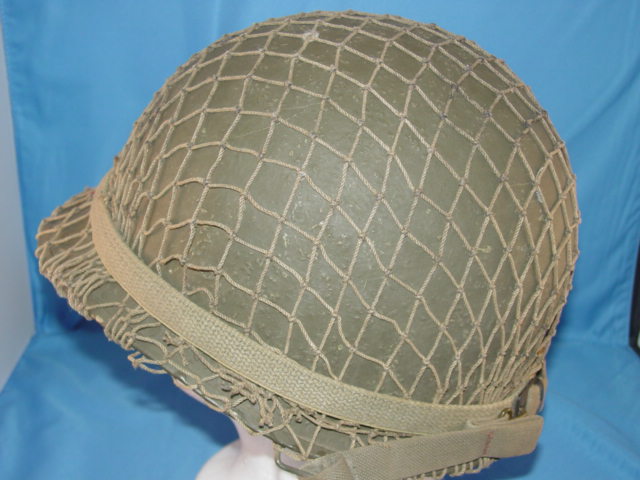
The item featured here is a United States Army M-1 helmet. As issued during World War Two.
|
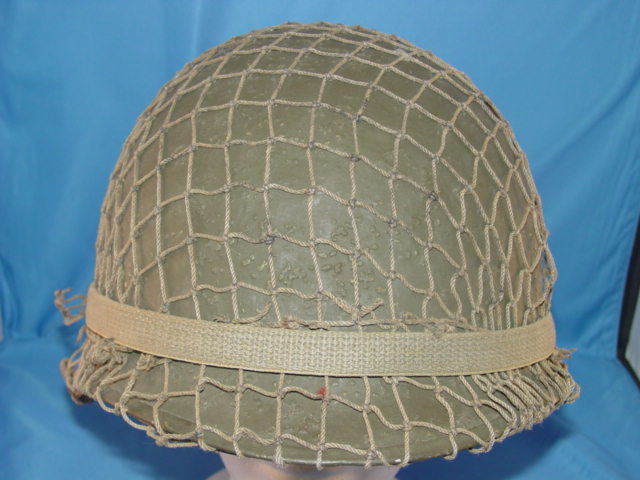
The design of the helmet consists of a metal shell with two
swivel bails
attached to each side. The canvis chin strap is secured to each bail. A metal buckle device
attached to the end of the chin straps hooked together to secure the helmet to the soldier's
head.
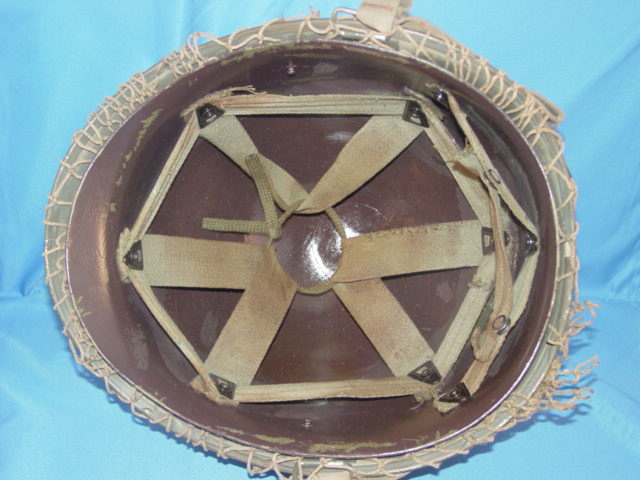
A fiberglass liner is placed inside of the metal shell. The liner was lighter in weight and
contained the canvis suspension that made the helmet more comfortable to wear. The liner has
a thin lether chin strap that was not permanently attached to it.
The liner could be worn without the shell. The shell could not be worn without the liner.
The front of the liner has a metal gromet. Rank insignia could be attached through the hole.
This practice was abandoned after it was realized that enemy snipers could identify and target
officers.
|
The "Military minute" is a series of instructional videos created by MilitaryItems.com for the purpose of
providing basic information about military collectibles. The idea is to expose people to the exciting
world of military collectibles.
The video presentation coupled with detailed photographs and written information, including a military
collectible's price guide, enhances the visitor's experience.
Whether you are a long time collector, a beginner or simply have an interest in the history and value of
each collectible, we hope that you find the information presented here useful.
|
|
This page is a recognition and identification guide for US hats and helmets. Multiple
detailed photos of a specific sample are provided. Descriptions point out clearly defined
points that should be noted.
One of the most commonly asked questions is "How much is my US headgear worth?".
A price guide is included here to address this question. The value of the hats and helmets
is reviewed over a period of several years. A trend can be observed. The present worth
of US militaria in the collector's market is illustrated.
This service is provided free of charge to the visitor/enthusiast courtesy of
MilitaryItems.com,
a company dedicated to the preservation of military history and to providing quality military
antiques and collectibles to museums, institutions and the general public.
|
|

A set of small metal studs is attached to the side of the liner. The leather chin strap
had a couple of metal hooks that could snap to the side posts in turn attaching themselves
to the liner.
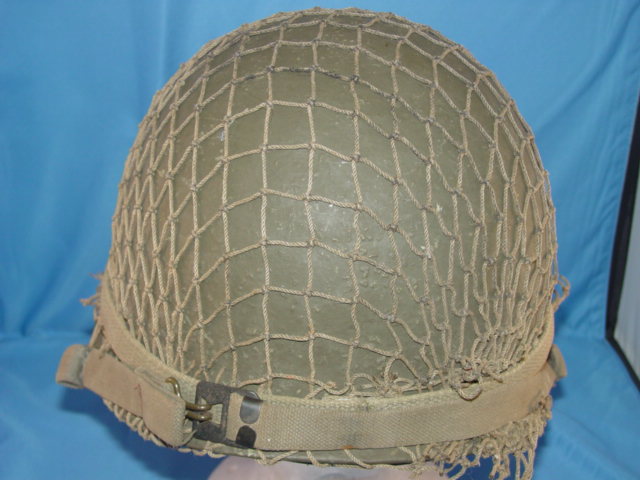
The helmet shown here has a net cover. These items were popular among GI's because it would
allow them to attach twigs and other camouflaged material to provide concealment in the field.
The nets were cut off from cargo nets used in Navy ships.
The edge of the helmet was covered with a metal insert that ran the entire perimeter. This piece was
added to cover any rough edges left after the manufacturing process. It protected the GI from getting
any cuts by the metal.
The area where the starting and ending points of the insert meet forms a seam. WWII helmets had the
seam in the front of the helmet. Post war (and some late war) helmets had it in the back. This fact
has given birth to the term "Front seam".
|
US headgear is currently being
reproduced.
It is becoming more difficult to be able to tell the fake ones from the real ones because
the quality of the reproductions is improving. The collector must become familiarized with
the construction style and materials employed in the manufacturing of this headgear.
Attention to the details is critical in order to be able to determine the authenticity of
the collectible.
If you have an interest is seeing other American military headgear, you can do so by
going to our US Military headgear
identification guide. Where we cover Army, Navy, Army Air Force and other organizations.
|