|

|
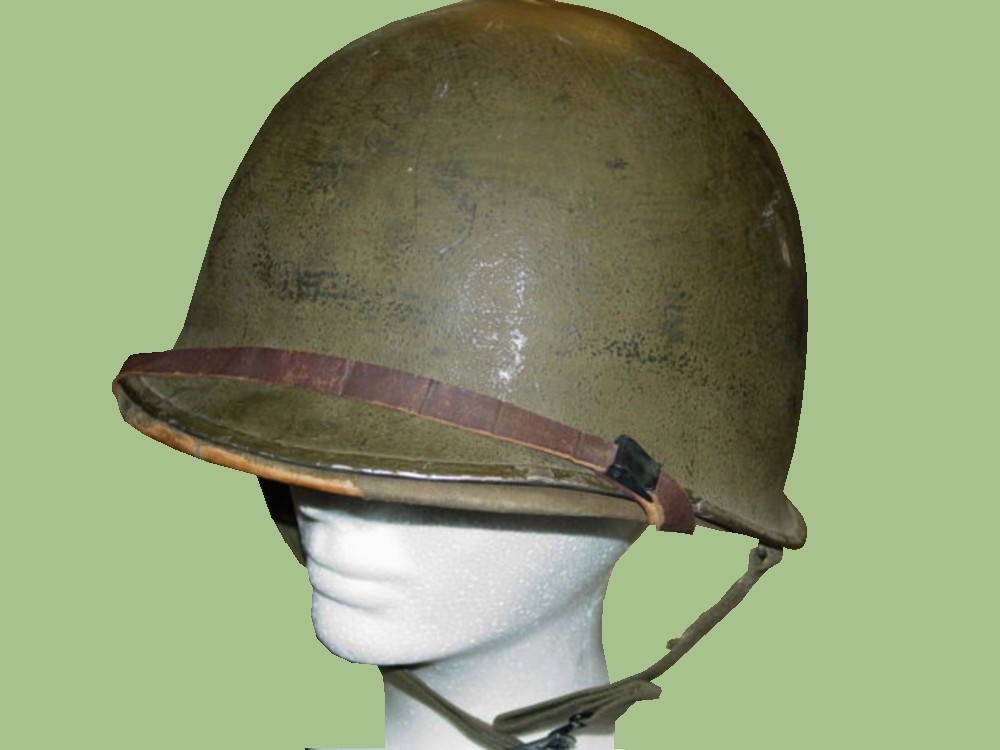
WWII US Army M-1 Hawley Liner Helmet -
The M-1 steel pot helmet is one of the most utilitarian designs produced for a U.S. helmet and one of the
longest lasting. Many news reels and pictures show the GI's using their helmet to cook, dig, carry water
and many other functions.
This helmet might be one of the most recognizable icons of WWII. Approximatelly 8 million helmets were produced
during WWII by a large number of companies.
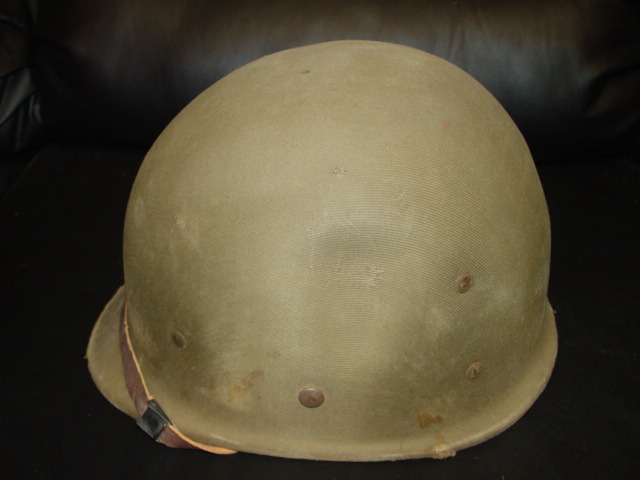
The design of the helmet consisted of a steel outer shell with a separate fiber glass inner shell, known as the liner.
The outer shell came with a fixed canvis chin strap while the liner had a lighter duty, removable leather chin strap.
What makes the helmet featured here more interesting is the use of a cardboard base liner. This design was done in
very small numbers. as one might expect, cardboard does not hold up well to the rigors of combat. The liner was
soon discarded. The cardoard helmet limer is known as the Hawley liner.
The M-1 helmet was introduced in 1941. The early versions of the helmet had a fixed bail. later on
the armed forces figrued out that the failure rate in such design was greater because the force
exerted on the bail when the soldier was runing was too much and would cause the bail to break.
The seam was located in the front of the helmet.
| 
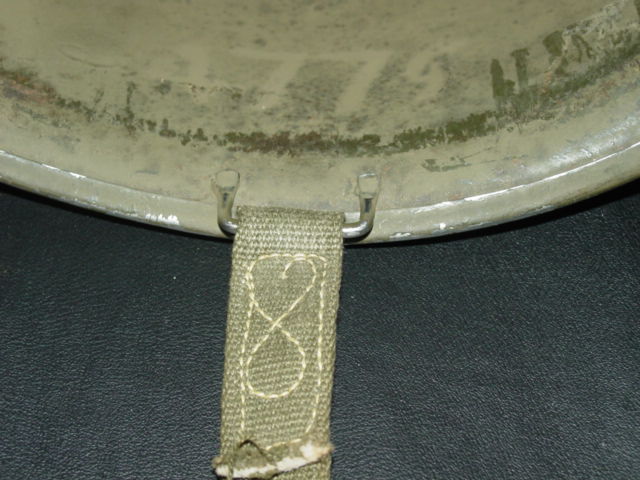
The following photograph illustrates the fixed bail design. The design consists of a wire-type bracket
directly welded to the main body of the helmet. This is a rigid approach that does not allow any give
when in motion.
The chin strap was looped to the bracket and stitched closed. The example featured here has a figure
eight pattern.
|
The "Military minute" is a series of instructional videos created by MilitaryItems.com for the purpose of
providing basic information about military collectibles. The idea is to expose people to the exciting
world of military collectibles.
The video presentation coupled with detailed photographs and written information, including a military
collectible's price guide, enhances the visitor's experience.
Whether you are a long time collector, a beginner or simply have an interest in the history and value of
each collectible, we hope that you find the information presented here useful.
|
|
This page is a recognition and identification guide for US hats and helmets. Multiple
detailed photos of a specific sample are provided. Descriptions point out clearly defined
points that should be noted.
One of the most commonly asked questions is "How much is my US headgear worth?".
A price guide is included here to address this question. The value of the hats and helmets
is reviewed over a period of several years. A trend can be observed. The present worth
of US militaria in the collector's market is illustrated.
This service is provided free of charge to the visitor/enthusiast courtesy of
MilitaryItems.com,
a company dedicated to the preservation of military history and to providing quality military
antiques and collectibles to museums, institutions and the general public.
|
|
B
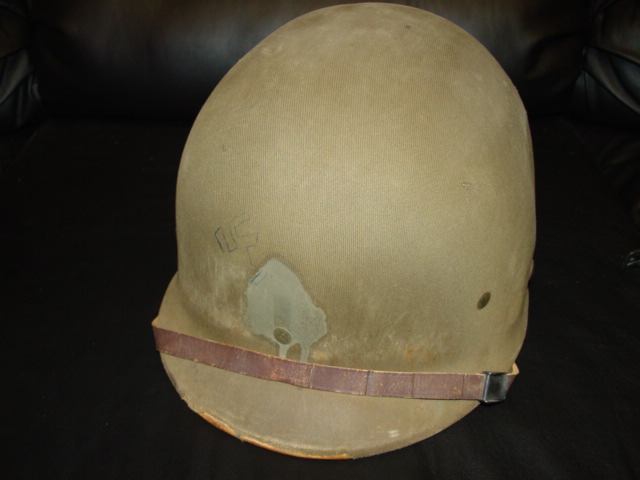
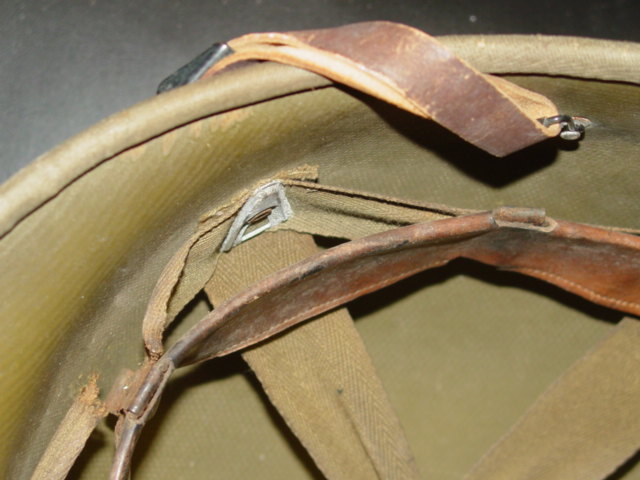
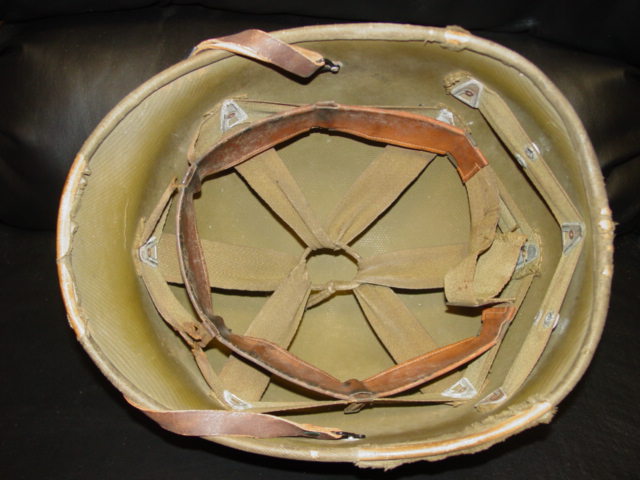
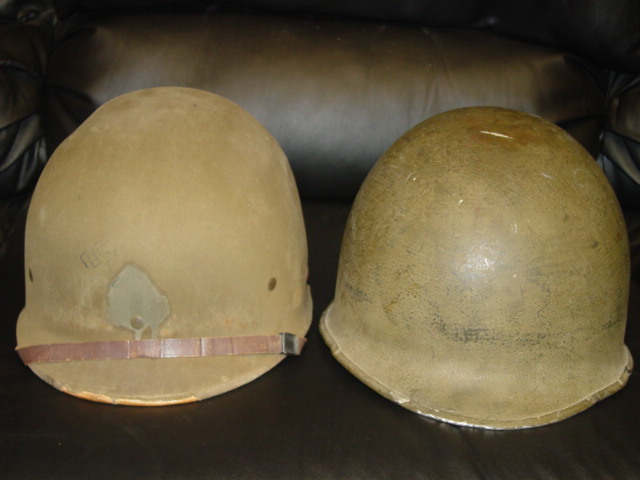
The shape and characteristics of the Hawley liner were identical to those of the fibergalss counterpart.
The differences were the material of construction and the absence from teh front metal gromet, which is where
insignia could be placed.
The suspension was made of a series of canvis straps. The sweatbad has a leather cover. The whole assembly
was riveted to the body of the liner. Small buckles were provided to adjust the suspension. However,
doing so was difficult and very clumsy.
The hawley liner was issued in very small numbers during the early days of World War Two.
| 
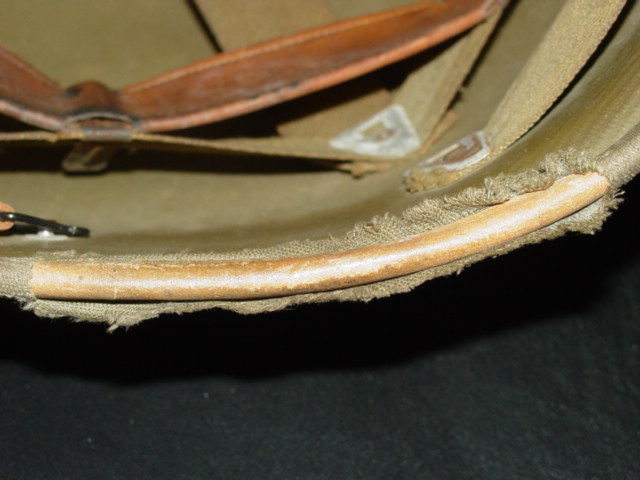
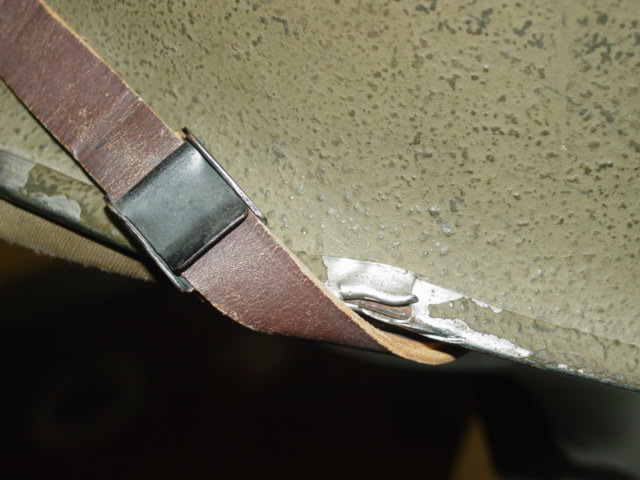
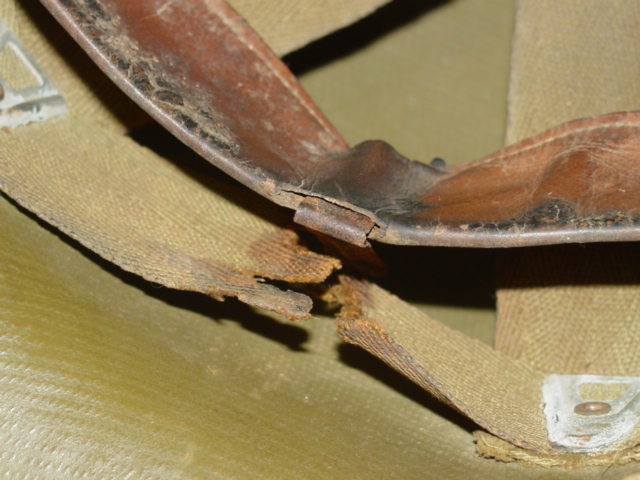
The following photos show some of the damage that was common to the liner. The areas that were exposed to
the most contact showed the problems. For example, the rim of the liner was covered with a thin layer of
canvis. This would break apart and show the cardboard itself. This is a serious problem in any wet weather
situation.
| 
| 
| 
| 
| 
| 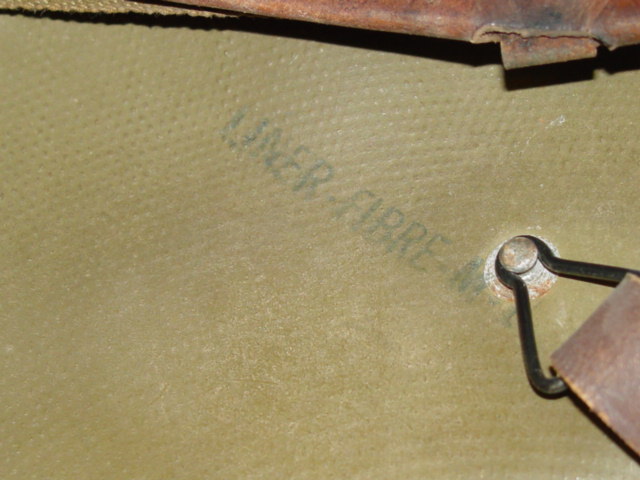
The inside of the liner is stamped with black ink. The information reads "Liner-Fibre - M1".
The post for the leather chin strap is riveted directly to the liner. As it can be seen here, the
leather chin strap was secured to the post by using a small wire hook which snapped into place
when pressure was applied.
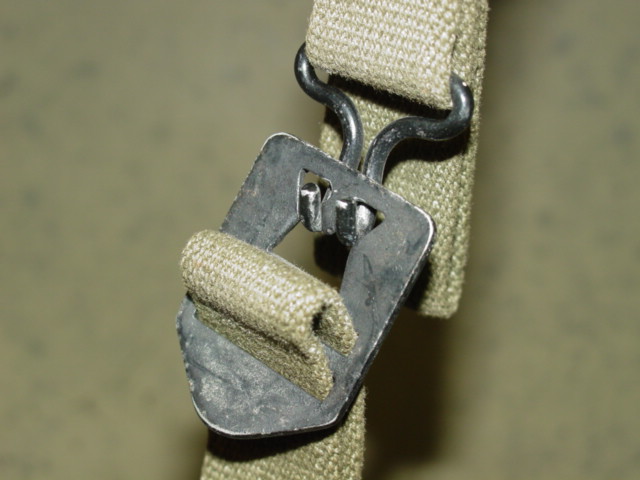
The buckle and hook design for the regular canvis chin strap is also visible in the photo below.
The M-1 helmet continued to use the same basic chin strap design until the helmet was discontinued
in the 1980's. The only differences between the various years consisted on the shape of the
hardware.
| 
| 
| 
US headgear in general is currently being
reproduced.
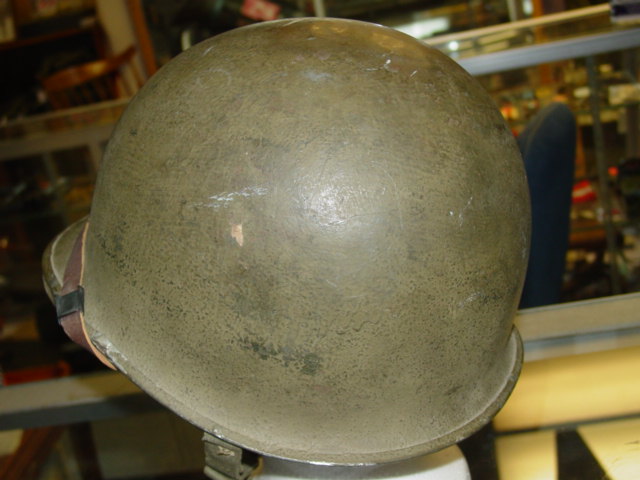
It is becoming more difficult to be able to tell the fake ones from the real ones because
the quality of the reproductions is improving. The collector must become familiarized with
the construction style and materials employed in the manufacturing of this headgear.
Attention to the details is critical in order to be able to determine the authenticity of
the collectible.
If you have an interest is seeing other American military headgear, you can do so by
going to our US Military headgear
identification guide. Where we cover Army, Navy, Army Air Force and other organizations.
|
| |
|
|
PRICING GUIDE INFORMATION
The value for the US Army helmets and other military antiques and collectibles is provided as a means to
educate the collector community and individuals who have a general interest on the field. The following is
an estimated value. Prices may vary in every state and every country. This service is provided courtesy of
MilitaryItems.com .
The source for military antiques and collectibles in the web.
| Year |
2016 |
2017 |
2018 |
2019 |
2020 |
2021 |
2022 |
2023 |
2024 |
2025 |
| Value |
$500.00 |
$0.00 |
$0.00 |
$0.00 |
$0.00 |
| Availability |
Rare |
Rare |
Rare |
Rare |
Rare |
| Invest Grade |
A |
A |
A |
A |
A |
While the item featured here is not for sale, similar items like it are available for
purchase in our website MilitaryItems.com
|
|